
Chasing back pain where it hurts? The source may be hiding in your hips, glutes, or deep low back muscles.
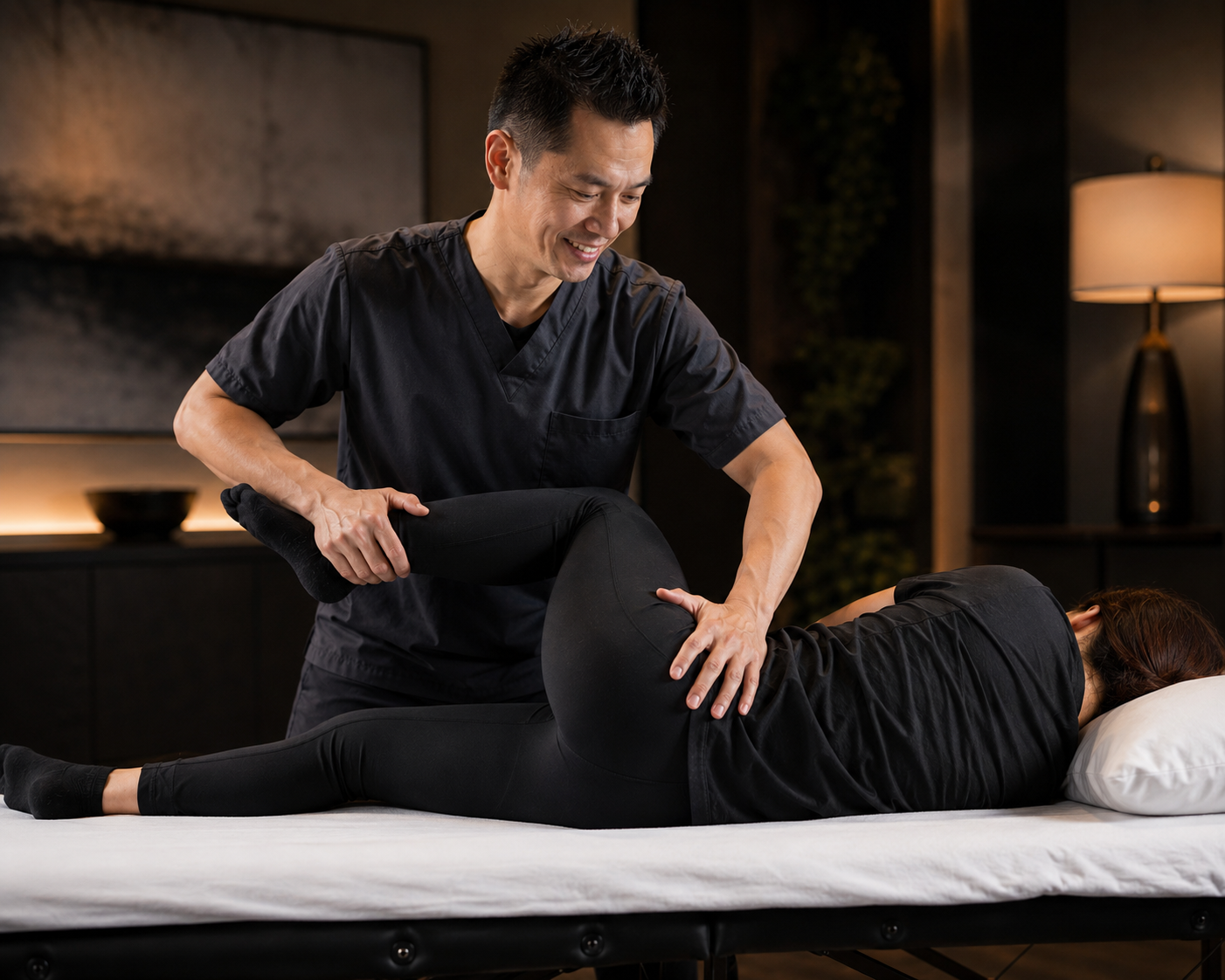
Back pain has a way of taking over your life quietly.
At first, it is just a little tightness when you get out of bed. Then it becomes that deep ache after standing too long, sitting too long, driving across town, working a long shift, or trying to sleep in a hotel bed that feels like it was designed by someone who hates spines.
If you live in Las Vegas, Henderson, Summerlin, Green Valley, or you are visiting the Strip for work or vacation, your back is probably dealing with more stress than you realize.
Long casino shifts. Convention floors. Desk work. Driving. Lifting. Stress. Dehydration. Poor sleep. Travel. Heat. Hard floors. Too much sitting, then too much standing. That combination can create a perfect storm for something many people have heard of but do not fully understand: myofascial trigger points.
Most people call them knots. But a true myofascial trigger point is more than a random sore spot. It can create local pain, refer pain somewhere else, restrict movement, and make your back feel like the problem is coming from your spine when the real source may be muscular. Medical literature often describes myofascial trigger points as hyperirritable spots in taut bands of skeletal muscle that may produce local tenderness and referred pain.
That is why back pain can be so frustrating. Where you feel it is not always where it starts.
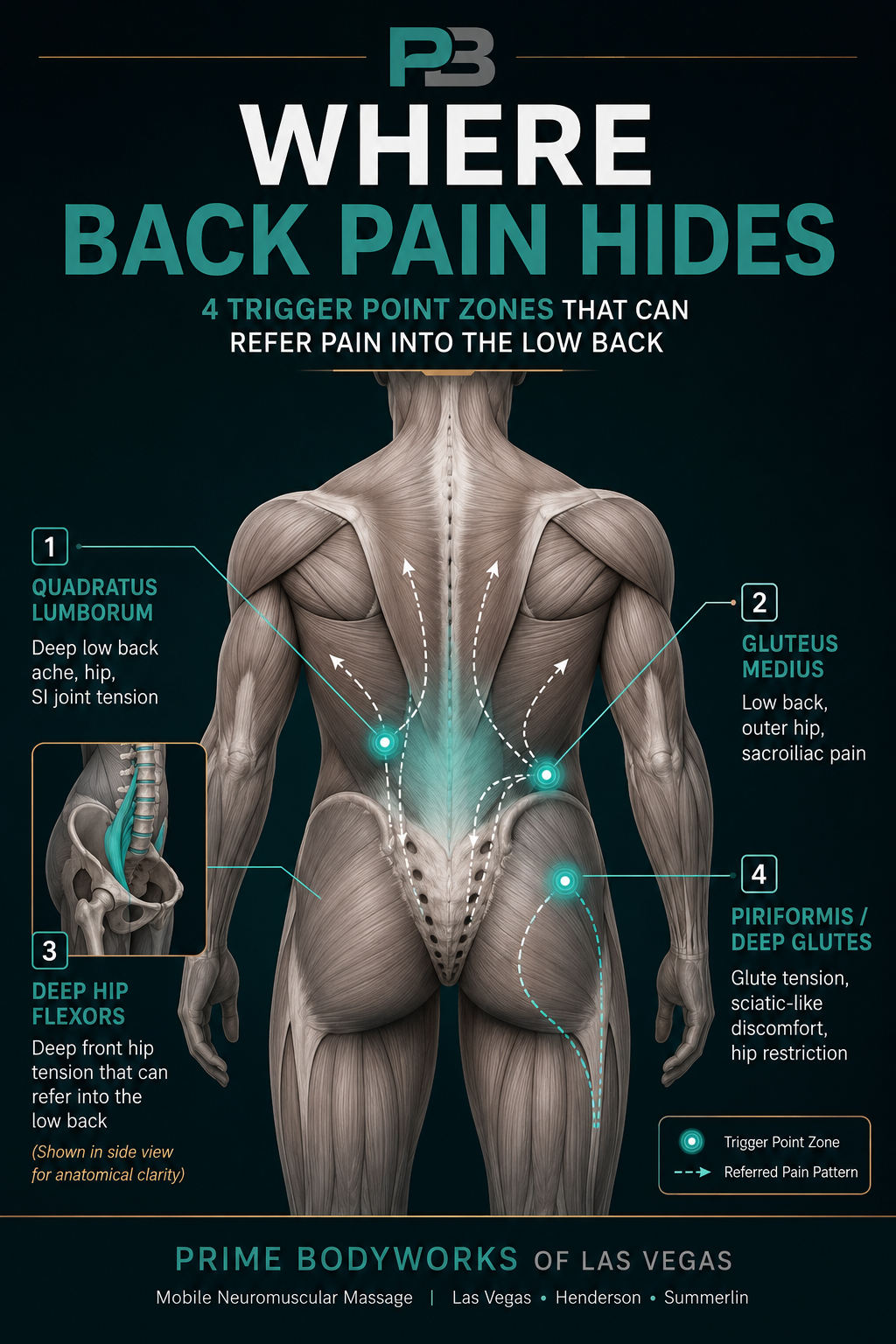
Anatomical Map: The four major lower body trigger point zones that frequently project tension and discomfort into the lumbar spine.
What Is a Myofascial Trigger Point?
A myofascial trigger point is a sensitive, irritated spot inside a tight band of muscle. Think of a healthy muscle like a rope that can lengthen, shorten, contract, and relax smoothly. A trigger point is like a small section of that rope that stays clenched. It does not fully let go. It can become tender when pressed, limit range of motion, and send pain into nearby or distant areas.
That last part is important: trigger points can create referred pain. This means a trigger point in your hip, glute, low back, or deep core muscles can make your back hurt, even if the most painful spot is not the true source. Because the nervous system can interpret irritation from one area as pain somewhere else, trigger points can create referred pain patterns.
This is one reason some people chase back pain for years. They keep rubbing where it hurts, icing where it hurts, stretching where it hurts, and still only get temporary relief. The body is more connected than that. Your low back may be complaining, but your hips may be the ones generating the stress.
Why Trigger Points Matter With Back Pain
Back pain is not always caused by a disc, arthritis, or a structural problem. Those things can absolutely matter, and serious or worsening symptoms should always be evaluated by a qualified medical provider. But many cases of stubborn, recurring back pain have a strong muscular component.
Myofascial pain patterns are commonly associated with localized muscle tenderness, referred pain, restricted movement, and functional limitation. That means your pain may not be “just tight muscles,” but it also may not be something hopeless or mysterious. It may be a pattern—and patterns can often be worked with.
As a neuromuscular massage therapist, I look for those patterns. Not just “where does it hurt?” but:
- What position makes it worse?
- What position gives you relief?
- Does the pain travel?
- Does it feel deep, dull, sharp, burning, or achy?
- Does it show up after standing or sitting?
- Does it get worse after walking, sleeping, working, or driving?
- Does pressure on the hip recreate the back pain?
- Does the low back feel tight because it is the problem, or because it is protecting something else?
That kind of thinking matters because trigger points do not always announce themselves clearly.
Dealing with low back, hip, neck, or shoulder tension in Las Vegas or Henderson?
Prime Bodyworks brings targeted neuromuscular massage directly to your home, hotel, or private space. Avoid the traffic and stay relaxed.
📞 Text or Call Shawn at 702-900-8915 to ask about availability.
The Pain Location Is Not Always the Problem
If your low back hurts, it is natural to assume the low back is the problem. Sometimes it is. But sometimes the low back is the victim. There are several muscles that can create or contribute to pain in the low back, hips, glutes, and sacroiliac area. This is why a thoughtful back pain session should not only chase the painful spot; it should follow the pattern.
Here are the four major trigger point zones highlighted on our guide that can refer pain into the low back:
1. Quadratus Lumborum: The Deep Low Back Workhorse
The quadratus lumborum, often called the QL, is a deep muscle that connects the lower ribs, spine, and pelvis. This muscle works hard when you bend, twist, hike one hip, carry uneven loads, brace your body, stand for long periods, or shift your weight from one leg to the other.
When the QL develops trigger points, the pain can feel deep, sharp, stubborn, and hard to reach. It can show up in the low back, hip, glute, or sacroiliac area. People with QL trigger point patterns often note that their back feels like it locks up, it hurts getting out of bed or standing up from a chair, and regular stretching only provides fleeting relief.
In Las Vegas, I see this pattern often with hospitality workers, travelers, performers, tradespeople, and anyone whose body is forced to stay braced or upright for hours at a time on unyielding surfaces.
2. Gluteus Medius: The Hip Muscle That Can Feel Like Low Back Pain
The gluteus medius sits on the outside of your hip. It helps stabilize your pelvis when you walk, stand, climb stairs, shift weight, or balance on one leg. When this muscle gets overloaded, it can refer pain directly into the low back, sacroiliac area, and outer hip.
This is very common for Las Vegas locals and visitors because so much of life here involves long periods of standing or walking on hard resort floors. If your gluteus medius is overworked, your low back may start paying the price. Common signs include low back aches after standing, increased discomfort when sleeping on your side, or finding that pressing into the side of the hip recreates a familiar back ache.
3. Deep Hip Flexors: The Front of the Hip Referring to the Back
The deep hip flexors, especially the iliopsoas region, are heavily involved in sitting, walking, posture, and hip movement. These muscles are located deep in the front of the hip and pelvis, but their tension heavily influences how the low back feels.
If you sit for hours at a desk, drive constantly across the valley, or spend long stretches with your hips flexed, the front of the hip can become short and guarded. Over time, that structural pull affects the pelvis and lumbar spine, leaving your low back feeling tight, compressed, or achy. This is why only rubbing the back may not fully solve the issue; if the front of the hip keeps pulling the pelvis into a stressed position, the back muscles will stay on guard.
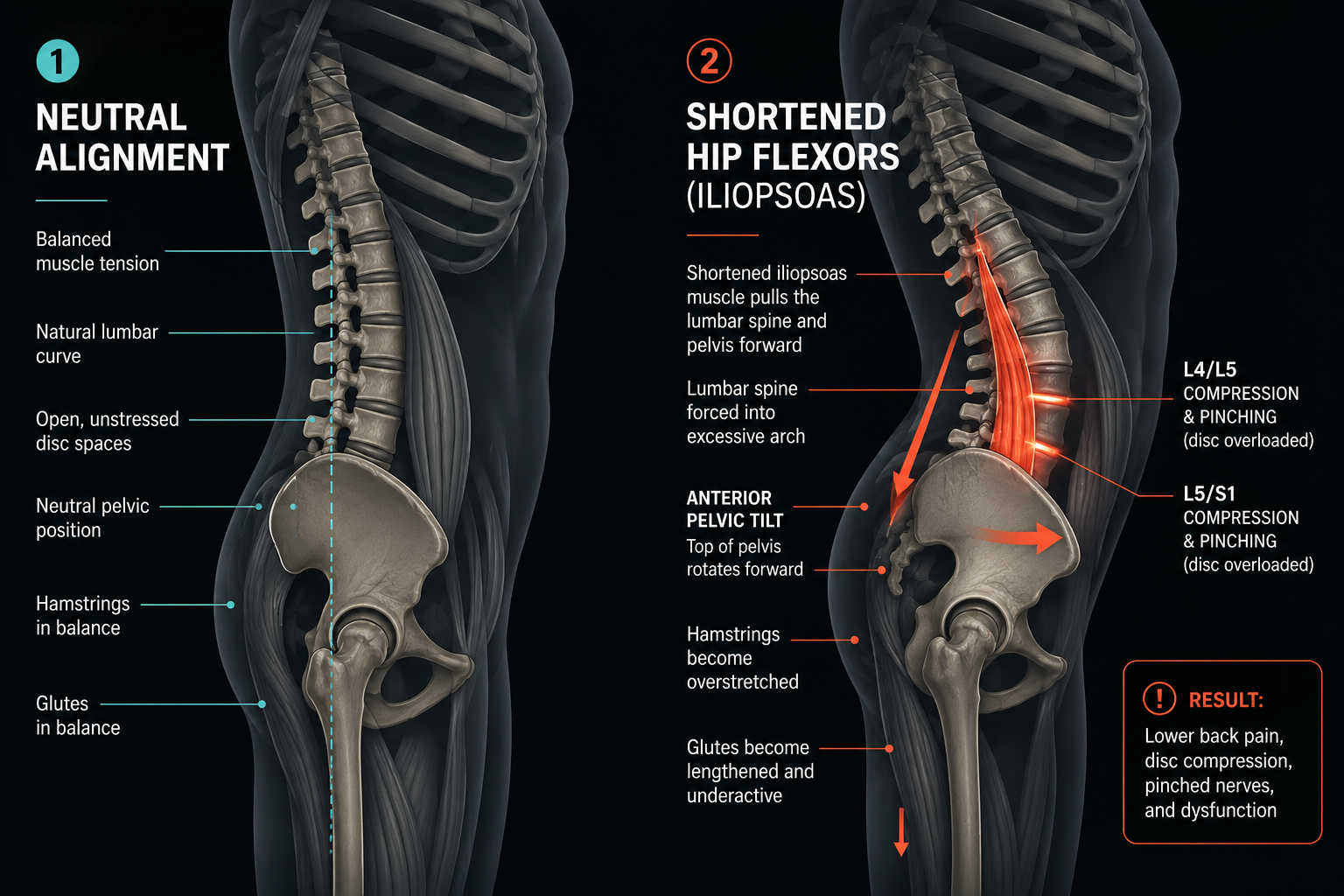
Mechanical Tug-of-War: How prolonged sitting shortens front hip flexors, pulling the pelvis out of alignment and compressing the lumbar spine.
4. Piriformis and Deep Glutes: The Sciatica Mimickers
The piriformis and deep glute muscles sit underneath the larger gluteus maximus and help control hip rotation and pelvic stability. When these muscles get tight or irritated, they can create a deep ache in the glute, hip, sacroiliac area, and sometimes down the back of the leg.
This is where a lot of people start wondering if they have sciatica. While true nerve involvement should always be medically evaluated, trigger points in the piriformis and deep glutes can easily irritate the area around the sciatic nerve or create sciatic-like symptoms. If you drive across Las Vegas all day, sit for extended meetings in Henderson, or log miles on convention floors, these deep hip rotators are often a primary piece of the puzzle.
Why Las Vegas Bodies Get Unique Stress Patterns
Back pain happens everywhere, but Las Vegas has its own physical stress signature. This city can be physically demanding on the body. We have locals working long hospitality shifts on hard floors, visitors walking miles inside massive resorts, convention workers hauling equipment, and professionals sitting in traffic on the 215 or I-15. Combine that with dry desert air, inconsistent schedules, and high daily stress, and your muscles are left with very little room to recover.
This is why a generic spa massage may feel good for a day but not touch the real issue. If the same pain keeps coming back, your body is likely dealing with an unaddressed soft tissue pattern that needs specific, targeted attention.
What Trigger Point Therapy Does Differently
Trigger point therapy is not just about applying heavy, reckless pressure. Good trigger point work is specific, targeted, and listens to the tissue response. The goal is not to force the muscle into submission, but to locate the irritated point, apply appropriate pressure, and wait for the nervous system to respond so the muscle can soften naturally.
Depending on your body’s baseline, a session may include sustained compression, slow deep tissue work, neuromuscular therapy, myofascial release, and gentle breath work. The pressure should always feel productive—what many call a “good hurt”—rather than an intense pain that causes your body to brace or fight back. True results come from working with the nervous system, not wrestling against it.
A Simple Awareness Check for Low Back Tension
Try this simple assessment on yourself:
- Stand or lie comfortably on your side.
- Find the top ridge of your hip bone.
- Move your fingers slightly below and behind that ridge into the fleshy side of the hip (Gluteus Medius).
- Press slowly and firmly into the muscle and hold for a few seconds.
What do you notice? If that targeted pressure reproduces a familiar ache across your lower back, hip, or sacroiliac area, your gluteus medius may be contributing to the pattern. It means your back pain may not be entirely a back problem, but a compensation pattern.
When Back Pain Needs Medical Attention
Massage therapy can be incredibly helpful for muscular pain, tension, trigger points, and movement restriction. However, some symptoms require immediate medical evaluation. Please seek care from a qualified medical professional if you experience:
- New loss of bladder or bowel control.
- Numbness or a “pins-and-needles” sensation in the groin or saddle area.
- Severe or progressive weakness in the leg or foot.
- Severe pain immediately following a major fall, accident, or trauma.
- Fever, chills, or unexplained weight loss paired with back pain.
- A history of cancer accompanied by a brand-new pain pattern.
Massage is never a replacement for medical care when clinical red flags are present. But if your pain is muscular, recurring, related to posture, or tied to specific movement and tension patterns, mobile neuromuscular massage may be a strong option.
What Makes Prime Bodyworks Different
Prime Bodyworks of Las Vegas is built around personalized mobile bodywork, not rushed spa routines. I bring the session directly to your home, hotel room, or private space, so you do not have to fight traffic, sit in a waiting room, or drive across the valley after your body finally starts to relax.
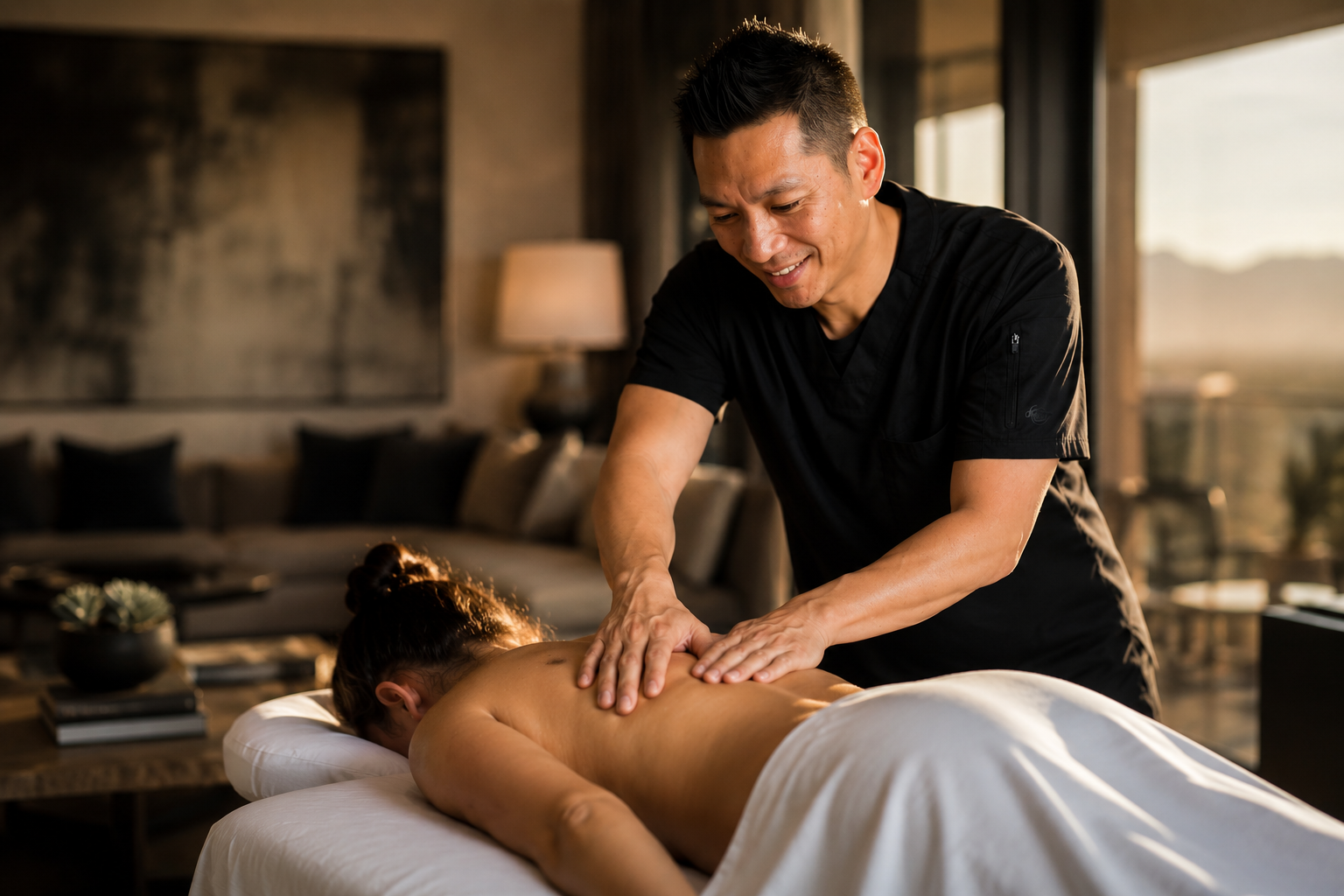
Clinical Experience Brought to You: Shawn setting up a dedicated mobile recovery session designed to target specific muscular restrictions.
My work focuses deeply on trigger point therapy, neuromuscular massage, and dedicated deep tissue work for persistent neck, shoulder, hip, and back patterns. The goal is never to give you a cookie-cutter massage. It is to figure out what your body is asking for and work with it intelligently—whether that means focused hip work, releasing the deep core, or helping your nervous system down-regulate so the deeper layers of tissue can finally let go.
Frequently Asked Questions
Are trigger points the same as muscle knots?
Most people use the word “knot” to describe any sore, tight area. A myofascial trigger point is more specific. It is usually described as a sensitive spot in a taut band of muscle that can cause local pain, referred pain, and movement restriction.
Can trigger points cause low back pain?
Yes. Trigger points in muscles such as the quadratus lumborum, gluteus medius, deep hip flexors, piriformis, and deep glutes can contribute to low back pain patterns. They can also refer pain, meaning the painful area may not be the true source of the issue.
Why does my back pain keep coming back after massage?
If the massage only relaxes the painful area but does not address the muscles feeding the pattern, the pain may return. For example, low back pain may involve the hips, glutes, hip flexors, posture, work habits, sleep position, stress, and recovery. Lasting improvement often requires working the pattern, not just the symptom.
Is trigger point therapy painful?
It can feel intense, but it should not feel out of control. Productive trigger point work often feels like a deep, familiar ache or “good hurt.” Sharp, electric, or unbearable pain is not the goal. Communication during the session is important.
Do you serve Henderson and Summerlin?
Yes. Prime Bodyworks of Las Vegas provides mobile massage in Las Vegas, Henderson, Summerlin, and nearby areas by appointment.
Your Back Pain May Be Telling a Bigger Story
Back pain is not always simple. Sometimes it is structural. Sometimes it is neurological. Sometimes it is stress. Sometimes it is posture. Sometimes it is years of overuse, under-recovery, and muscles that never got the chance to fully let go.
But if your back pain keeps returning, especially after sitting, standing, working, traveling, or sleeping poorly, myofascial trigger points may be part of the story. And if they are, the answer is not always more stretching, more pain pills, or another generic massage. Sometimes the answer is targeted work from someone who knows how to follow the pattern.
If you are in Las Vegas, Henderson, Summerlin, or visiting the Strip and you are tired of carrying the same tension day after day, Prime Bodyworks of Las Vegas offers mobile neuromuscular massage designed to help your body feel better, move better, and finally exhale.
Ready to stop chasing the same back pain pattern?
Call or Text 702-900-8915 to Ask About AvailabilityAuthority References
- Simons DG, Travell JG, Simons LS. Travell & Simons’ Myofascial Pain and Dysfunction: The Trigger Point Manual. Baltimore: Williams & Wilkins; 1999.
- Alvarez DJ, Rockwell PG. Trigger Points: Diagnosis and Management. American Family Physician (AAFP). 2002;65(4):653-661.
- Bron C, Dommerholt JD. Etiology of myofascial trigger points. Curr Pain Headache Rep. 2012 Oct;16(5):439-44.